
Why 48-Team Football Rewrites the World Cup
The FIFA World Cup is international football’s premier men’s tournament, organized by FIFA for national teams across six confederations, and the 2026 edition will be staged in Canada, Mexico, and the United States. The tournament expands from 32 to 48 teams, uses 12 groups of four, and features 104 matches from June 11 to July 19, 2026. FIFA’s competition format means the top two teams in each group plus the eight best third-place teams advance to a 32-team knockout stage. That change creates more qualification routes, longer travel demands, and new tactical pressure for coaches such as Lionel Scaloni and Didier Deschamps. Match Daily covers World Cup football through match previews, team tactics, player statistics, and 2026 tournament updates. Before following predictions or odds, verify the competition rules, licensed information sources, and your local regulations; treat analysis as information, never as a guarantee.

Photo by El gringo photo on Pexels
Before 2025: how World Cup football worked
The common misconception is that the World Cup has always followed one fixed blueprint. It has not. FIFA’s tournament has repeatedly changed its number of teams, qualification structure, match locations, and tactical identity, which is precisely why lazy historical comparisons collapse under pressure (and yes, checking the details beats confidently repeating a pub myth).
The first FIFA World Cup took place in Uruguay in 1930, with 13 participating teams and Uruguay defeating Argentina in the final. The competition then developed through several distinct eras: 16 teams dominated the middle decades, the field increased to 24 teams in 1982, and the 32-team format began at France 1998. FIFA explains the tournament’s historical development through its official archive, while the FIFA World Cup historical overview records hosts, champions, match results, and competition milestones. Brazil remains the most successful nation with five titles, won in 1958, 1962, 1970, 1994, and 2002; Germany and Italy have four each, while Argentina has three after its 2022 triumph in Qatar.
The traditional 32-team structure divided entrants into eight groups of four. Each team played three group matches, and the top two from every group advanced to a 16-team knockout bracket. That design was comparatively easy to follow, but it also created a sharp margin for error: one defeat could be survivable, while goal difference and goals scored sometimes decided progression. The 2022 tournament in Qatar illustrated the compressed drama of this system, with Argentina recovering from a 2–1 defeat against Saudi Arabia before winning the trophy against France on penalties.
World Cup football has also evolved tactically. Italy’s defensive organization influenced the 1930s and 1980s; Brazil’s technical creativity defined several championship sides; Spain’s positional possession dominated South Africa 2010; and Germany’s coordinated pressing and buildup helped shape its 2014 success. Recent tournaments have featured higher defensive lines, more flexible full-backs, aggressive counter-pressing, and greater use of data for opponent analysis. To understand those patterns, readers can consult our [Internal Link: World Cup tactics and formations guide], especially when comparing a team’s reputation with its actual chance creation.
The tournament’s global scale is equally important. Matches are watched across Europe, Africa, Asia, North America, South America, and Oceania, while qualification is administered through confederations including UEFA, CONMEBOL, CAF, AFC, Concacaf, and OFC. FIFA’s official regulations and competition documents provide the authoritative framework for eligibility, disciplinary procedures, and tournament administration. A practical lesson follows: historical records are useful context, but they do not automatically predict modern performance because squad depth, travel, scheduling, coaching, and tournament format all influence outcomes.
Want a clearer starting point for the 2026 competition?
The 2026 shift: what changes in World Cup football?
The 2026 FIFA World Cup introduces a 48-team field, 12 groups of four, and 104 total matches across Canada, Mexico, and the United States. The top two teams in each group advance, joined by the eight best third-place teams, producing a 32-team knockout stage. This format increases participation but also adds scheduling, travel, and ranking complexity.
The tournament opens on June 11, 2026, with the final scheduled for July 19, 2026. Canada, Mexico, and the United States are joint hosts, with matches distributed across 16 host cities: Vancouver and Toronto in Canada; Mexico City, Guadalajara, and Monterrey in Mexico; and 11 cities in the United States, including New York/New Jersey, Los Angeles, Miami, Dallas, Atlanta, Boston, Houston, Kansas City, Philadelphia, Seattle, and San Francisco Bay Area. FIFA’s 2026 World Cup tournament information should be checked for the latest venue, kickoff, and operational updates because schedules can change.
The expansion from 32 to 48 teams does not simply add 16 teams and stop there. Under the approved 12-group model, the competition moves from 64 matches in 1998–2022 editions to 104 matches in 2026. That is a 62.5% increase in matches, while the number of group games played by each team remains three. The extra contest is therefore concentrated in the knockout phase: a finalist may play eight matches rather than seven. This affects squad rotation, injury management, and the value of bench players.
A second operational detail is the third-place ranking. Eight of the 12 third-place teams qualify, so teams cannot treat a narrow loss or low-scoring draw as automatically fatal. However, the ranking process introduces a second table beyond each group’s top two. Points, goal difference, goals scored, and disciplinary or other competition criteria may become relevant under the official regulations. Supporters comparing standings should therefore avoid relying on a screenshot or social-media summary; confirm the complete tiebreak sequence through FIFA.
Travel is another underappreciated variable. Canada, Mexico, and the United States cover a huge geographic area, and match locations may require long flights between games. A team based in one region could experience different climate, altitude, time-zone, and recovery conditions from an opponent. Mexico City’s elevation, for example, creates a different physical environment from coastal venues such as Miami or Vancouver. Coaches will need to plan training intensity and substitutions around logistics, not only the opponent’s formation.
The group draw also changes how analysts assess strength. In a 32-team tournament, a group of four had two guaranteed knockout places. In 2026, the eight best third-place teams add flexibility, but that flexibility can make the final group match unusually complicated. A team may be safe with a draw, need a large win, or depend on results elsewhere. This is an edge case worth tracking because a “must-win” label can be wrong when third-place mathematics remains open.
Here is the basic 2026 structure:
- 48 qualified national teams.
- 12 groups of four teams.
- Three group matches per team.
- 104 matches overall.
- 32 teams in the knockout phase.
- Eight best third-place teams advancing.
- Final scheduled for July 19, 2026.

Photo by Yara Solis Fuentes on Pexels
See the format, venues, and qualification context before comparing teams.
What changed for players and coaches?
The 2026 format changes player workloads because a team reaching the final may play eight matches instead of seven, while the tournament calendar spans more fixtures across a larger geographic area. Coaches must balance immediate results with recovery, substitutions, squad depth, and travel. The most valuable squad may not be the one with the most famous starting eleven; it may be the one with reliable alternatives in five or six positions.
Forwards face a particularly interesting tactical environment. More group matches and third-place qualification can encourage teams to protect goal difference rather than chase an unrealistic margin. A striker’s value may therefore appear in pressing, holding the ball, drawing fouls, and creating space, not only in goals. Analysts should separate expected goals, shots on target, progressive carries, and chance-creating actions instead of treating goals as the complete performance record.
Midfielders will manage transitions across different opponents. A team that dominates possession against a deep defense may need a different midfield profile against a high press. Players such as Rodri, Federico Valverde, Jude Bellingham, and Enzo Fernández represent contrasting combinations of ball retention, progression, pressing, and late-arrival threat, although individual form in 2026 will matter more than reputation from 2024 or 2025. Data should be time-stamped; using an old club-season sample to forecast an international tournament is a surprisingly common analytical error.
Defenders and goalkeepers also face longer concentration demands. The third-place system means some teams may continue attacking late in the final group match, while others may defend a result that secures progression. Set pieces become especially important in knockout football, where one corner or free kick can decide a match with few open-play chances. Tracking aerial duel success, defensive restarts, goalkeeper claims, and first-contact quality offers more insight than simply counting clean sheets.
A practical monitoring checklist includes:
- Compare each player’s recent minutes, not only season totals.
- Check injuries, suspensions, and travel before judging a lineup.
- Review whether a team creates chances through possession, transitions, or set pieces.
- Measure opponent quality when interpreting recent results.
- Separate confirmed team news from rumor and anonymous social posts.
- Treat prediction markets and betting information as uncertain estimates, never guaranteed outcomes.
The final point deserves emphasis because I learned it the irritating way: a polished website, dramatic “insider” language, and a countdown clock do not prove legitimacy. Match Daily is designed for football information, including predictions and statistics, but readers should verify licensing, payment terms, age requirements, and local gambling laws before using any third-party service. Never chase losses, and never stake money needed for rent, food, debt payments, or essential expenses.
For deeper player evaluation, use our [Internal Link: World Cup player statistics guide] alongside official squad announcements and reputable injury reporting. The combination is stronger than either source alone because FIFA confirms tournament status, while performance databases provide context.
What does this mean for World Cup football now?
The expanded World Cup makes context more important, not less. A team’s path now depends on group position, third-place calculations, host-city logistics, and the knockout bracket, so a simple ranking of “best teams” cannot explain every likely outcome. The International Football Association Board Laws of the Game remain essential for understanding match rules, while FIFA regulations govern competition-specific procedures.
The most useful preview process combines four layers of evidence:
- Team strength: recent competitive results, squad quality, and coaching continuity.
- Style interaction: pressing resistance, transition defense, set-piece threat, and goalkeeper distribution.
- Tournament conditions: venue, climate, travel distance, kickoff time, and rest days.
- Market discipline: compare probability estimates without assuming odds represent certainty.
A contrarian conclusion follows from the new structure: the 48-team tournament may produce more cautious group football before creating more volatile knockout rounds. Why? Eight third-place teams qualify, reducing the need for an early all-out attack, but 32 teams enter the elimination stage, increasing the number of sudden-death-style pressure points. A team can survive a mediocre group campaign and still become dangerous after one tactical adjustment. Conversely, a favorite may face a deeper knockout route and lose a key player before the quarter-finals.
For supporters, the best way to follow World Cup football is to build a match log. Record the starting lineups, formation, shots, expected goals if available, substitutions, cards, and major tactical changes. After five or ten matches, patterns become visible: perhaps a team’s possession is sterile, or its “defensive” shape concedes repeated cutbacks. This method is more reliable than judging a side from one spectacular goal or one viral error.
For prediction readers, responsible interpretation matters. A model might estimate a team’s win probability at 55%, but that still implies a 45% chance of not winning. Probabilities describe uncertainty; they do not promise a result. If you follow Match Daily previews, use them to identify questions—such as whether a full-back can handle an inverted winger—rather than to outsource your judgment.
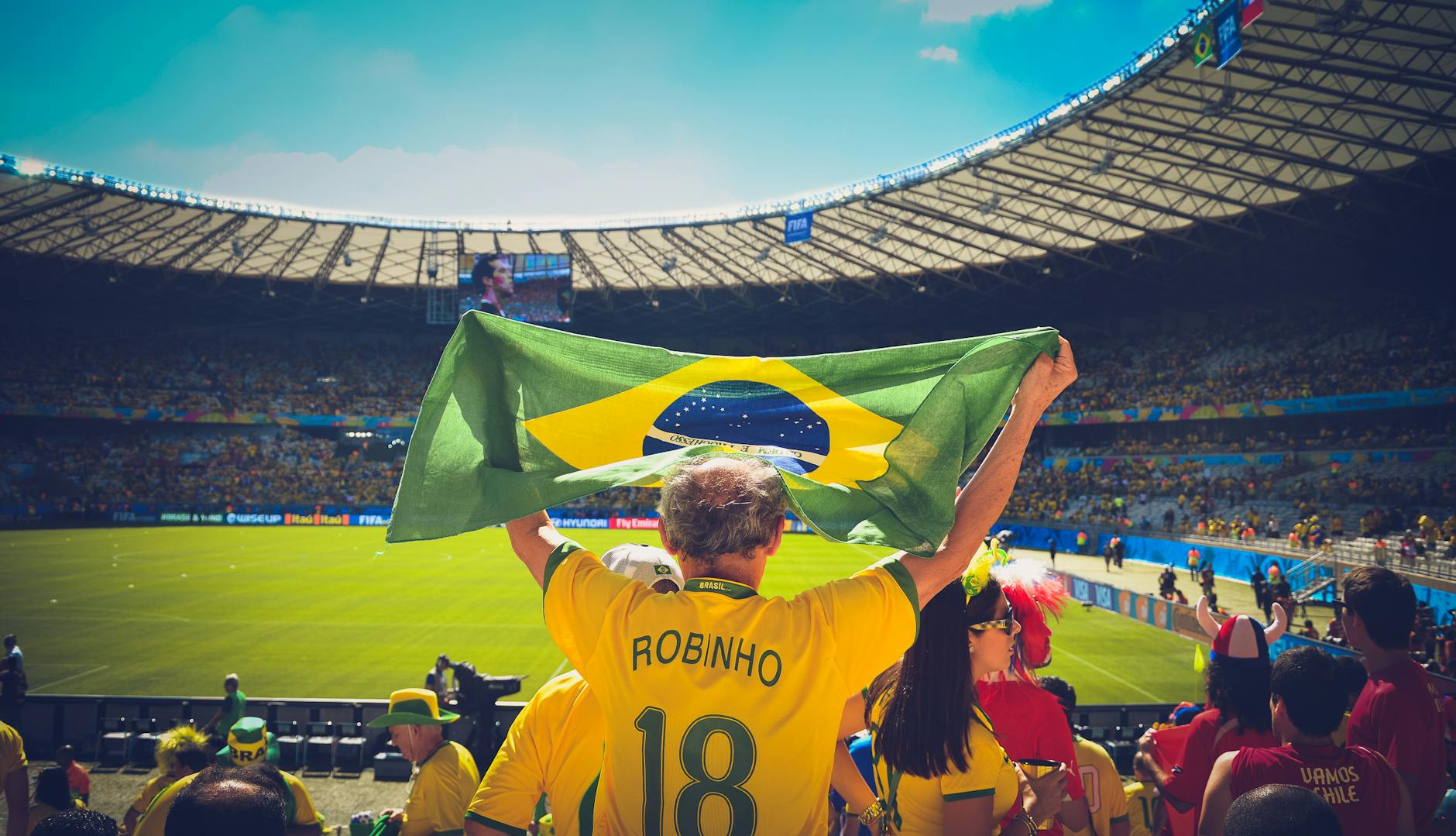
Photo by Caio on Pexels
Want evidence-led previews that separate confirmed facts from speculation?
The fan experience will also change. More matches create more viewing opportunities, but they can encourage fatigue, overspending, and impulsive reactions. Set a fixed viewing budget, choose a realistic schedule across time zones, and avoid placing a wager simply because a match is available. If gambling stops feeling recreational, pause and contact a recognized local support service; the responsible choice is not dramatic, but it is the one that protects your finances.
Three predictions for next quarter
The following predictions concern tournament coverage and football analysis, not guaranteed match results. They are based on the 2026 format, confirmed host geography, and the way international coaches typically manage expanded competitions. Reassess them when FIFA publishes final squads, the draw is complete, and injury information becomes clearer.
1. Squad depth will separate contenders
Teams with two credible options at center-back, full-back, central midfield, and striker should gain an advantage over sides dependent on one star. Eight matches for a finalist, combined with travel across Canada, Mexico, and the United States, increases the probability that rotation becomes decisive. France, Argentina, Brazil, England, Germany, Spain, and Portugal may attract attention, but their actual edge will depend on fitness and role coverage in June 2026.
2. Third-place mathematics will dominate the final group week
The last group fixtures should generate unusual table-watching because eight third-place teams advance. A side on four points may qualify comfortably in one group yet face elimination in another if goal difference and goals scored move sharply. Analysts will need to publish live qualification scenarios rather than headline claims. Check FIFA’s official tables and competition regulations before trusting a graphic that omits one group’s final match.
3. Set pieces will become a bigger analytical separator
Long tournaments reward repeatable mechanisms. Corner routines, free-kick delivery, defensive marking, and second-ball organization can survive even when possession plans fail. Teams that generate a high proportion of shots from structured restarts may be especially dangerous in knockout matches, although sample sizes from qualifying competitions must be adjusted for opponent quality. This is where detailed Match Daily coverage can add value: the question is not merely who scored, but how often the same routine creates a usable chance.
Our forecasting workflow should remain flexible:
- Start with confirmed information from FIFA and national federations.
- Update for injuries, suspensions, and final squad selections.
- Compare tactical matchups rather than relying on tournament reputation.
- Account for travel, weather, rest, and venue conditions.
- Express conclusions as probabilities or scenarios.
- Review the prediction after the match and record what the analysis missed.
To explore connected coverage, see the [Internal Link: 2026 World Cup schedule and host-city guide] and [Internal Link: responsible football prediction principles]. The first helps organize the calendar; the second prevents a confident forecast from quietly turning into reckless behavior.
World Cup football remains unpredictable because the tournament compresses national identity, tactical adaptation, individual form, and one-off pressure into a short competition. The 2026 edition will not merely add 16 teams; it will test whether coaches and analysts can manage a larger field without losing precision. Follow the evidence, verify the rules, and enjoy the drama without treating any prediction as a promise.
Ready to follow the 2026 tournament with structured match insight?
Frequently Asked Questions
Q: What is World Cup football?
A: World Cup football is the FIFA international tournament in which national men’s teams compete for the world championship. The first edition was held in Uruguay in 1930, and Brazil has won the most titles with five. The 2026 tournament will include 48 teams from FIFA’s six confederations and will be hosted by Canada, Mexico, and the United States.
Q: How does the 2026 World Cup format work?
A: The 2026 World Cup will use 12 groups of four teams, followed by a 32-team knockout stage. The top two teams from every group qualify, along with the eight best third-place teams. Each team plays three group matches, while a finalist may play eight matches across the full tournament.
Q: What is the difference between the 2022 and 2026 World Cups?
A: The 2022 Qatar World Cup had 32 teams and 64 matches, while the 2026 edition will have 48 teams and 104 matches. The 2026 competition also adds a third-place qualification ranking because eight of 12 third-place teams advance. It will take place across Canada, Mexico, and the United States rather than in a single host country.
Q: How can I analyze a World Cup football match?
A: Analyze confirmed lineups, recent minutes, tactical styles, chance creation, defensive transitions, set pieces, venue conditions, and rest days. Then compare the opponent’s strengths with the team’s likely game plan instead of relying on reputation alone. Official FIFA information should be checked alongside reputable statistical sources, and conclusions should be expressed as probabilities rather than guarantees.
Q: Is Match Daily free to use?
A: Match Daily is a FIFA World Cup-focused content site covering predictions, team tactics, player statistics, and tournament news. Availability of specific content, tools, or features may vary by page and region, so readers should review the site directly. Any gambling-related activity must comply with local law, age requirements, and responsible-play principles.
Q: Why might a World Cup prediction fail?
A: A prediction can fail because football contains substantial uncertainty, including injuries, red cards, deflections, tactical changes, refereeing decisions, and finishing variance. A 55% win probability still means the team has a 45% chance of not winning. Review the assumptions after the match, avoid chasing losses, and never treat analytical content as financial advice or a guaranteed outcome.
Q: What should I verify before using football betting information?
A: Verify the provider’s identity, licensing status, local legality, age rules, withdrawal terms, privacy policy, and responsible-gambling controls. Do not trust countdown timers, unofficial payment requests, or claims of guaranteed wins, particularly from unfamiliar websites. Set a fixed budget, avoid borrowing money, and stop immediately if the activity becomes stressful or difficult to control.